

Table of Contents
What Are Remote Jobs
Remote jobs are work opportunities that allow employees to perform their tasks from anywhere instead of working in a traditional office environment. These jobs rely heavily on digital tools, internet connectivity, and virtual communication. Whether working from home, a café, or while traveling, remote jobs provide flexibility and eliminate the need for daily commuting.
How Do They Work
Remote jobs operate through online platforms, communication tools, and cloud-based systems that enable collaboration from different locations.
How remote jobs function:
- Work is assigned digitally through project management tools
- Communication happens via video calls, emails, and chats
- Tasks are tracked using software like Trello, Slack, or Asana
- Files are shared through cloud storage (Google Drive, Dropbox)
- Employees follow deadlines instead of fixed office hours (in many cases)
Why Remote Jobs Are in High Demand Today
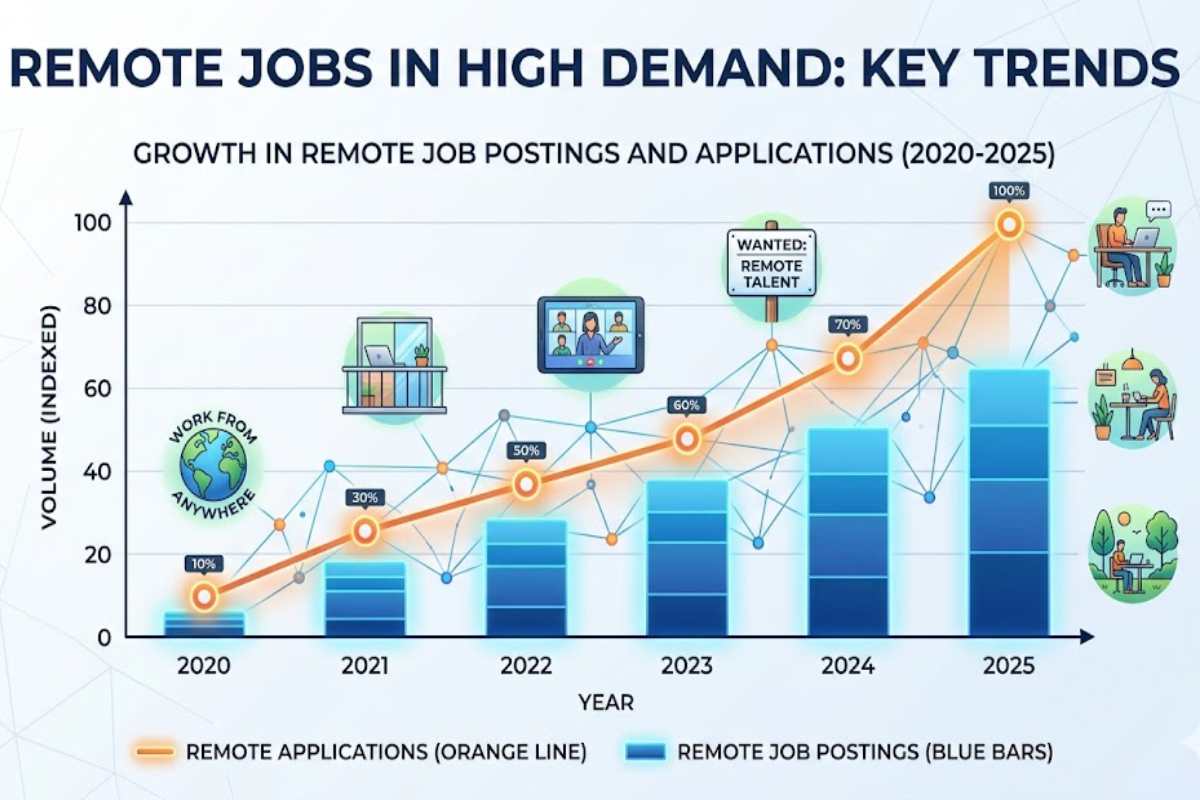
Remote jobs have seen massive growth due to technological advancements and changing work culture. Companies now prioritize productivity and cost-saving over physical presence, while employees value flexibility and work-life balance.
Reasons for high demand:
- Increased internet accessibility worldwide
- Cost savings for companies (office space, utilities)
- Better work-life balance for employees
- Access to global talent pool
- Rise of freelancing and gig economy
- Post-pandemic shift to remote work culture
Top Industries Offering Remote Jobs Hiring
| Rank | Industry | Example Roles |
| 1 | IT & Software | Developer, Tester |
| 2 | Digital Marketing | SEO Expert, Social Media Manager |
| 3 | Customer Support | Chat/Call Support |
| 4 | Education & E-learning | Online Tutor |
| 5 | Finance & Accounting | Accountant, Analyst |
| 6 | Healthcare | Telehealth Assistant |
| 7 | Content Writing | Blogger, Copywriter |
| 8 | Graphic Design | UI/UX Designer |
| 9 | Sales | Remote Sales Executive |
| 10 | HR & Recruitment | Talent Acquisition Specialist |
Popular Remote Job Roles You Can Apply For
| Rank | Job Role | Average Salary (Monthly ₹) |
| 1 | Software Developer | 40,000 – 1,50,000 |
| 2 | Content Writer | 15,000 – 60,000 |
| 3 | Data Entry Operator | 10,000 – 25,000 |
| 4 | Digital Marketer | 25,000 – 80,000 |
| 5 | Graphic Designer | 20,000 – 70,000 |
| 6 | Virtual Assistant | 15,000 – 50,000 |
| 7 | Customer Support | 12,000 – 40,000 |
| 8 | Online Tutor | 20,000 – 80,000 |
| 9 | SEO Specialist | 25,000 – 90,000 |
| 10 | Social Media Manager | 20,000 – 70,000 |
Skills Required to Get Hired for Remote Jobs
| Skill Category | Key Skills |
| Technical Skills | Basic computer knowledge, software tools |
| Communication | Email writing, video call etiquette |
| Time Management | Meeting deadlines, self-discipline |
| Problem Solving | Independent thinking |
| Adaptability | Learning new tools quickly |
| Digital Skills | MS Office, Google Workspace |
Best Websites to Find Remote Job Opportunities
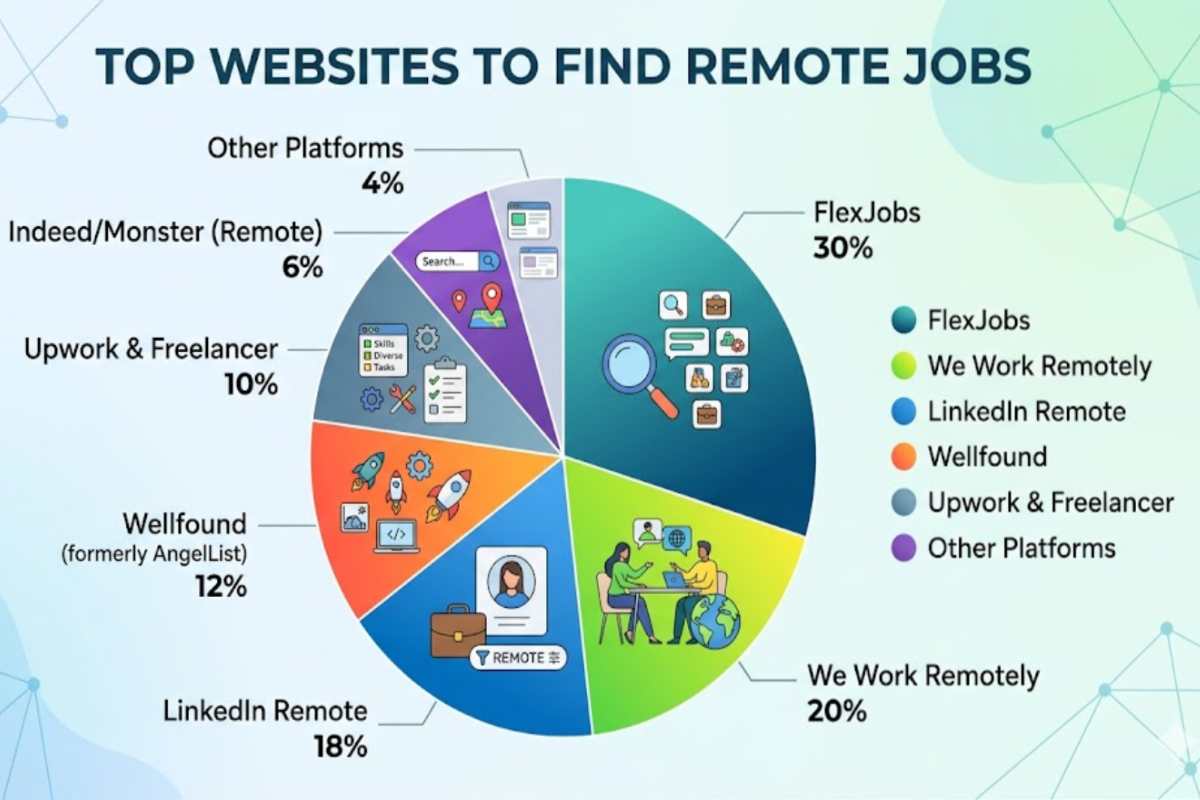
| Platform | Type of Jobs |
| Professional jobs | |
| Indeed | All categories |
| Upwork | Freelance work |
| Fiverr | Gig-based jobs |
| Freelancer | Project-based work |
| Toptal | High-skill freelance |
| Remote.co | Remote-only jobs |
| We Work Remotely | Global remote roles |
| Naukri | India-based jobs |
| Internshala | Internships & fresher jobs |
How to Apply for Remote Jobs Successfully
- Identify your skills and job role
- Create a professional resume
- Build an online profile (LinkedIn/portfolio)
- Search for jobs on trusted platforms
- Customize your application for each job
- Write a strong cover letter
- Apply consistently to multiple jobs
- Prepare for online interviews
Resume Tips for Remote Job Applications
Keep it professional:
- Highlight remote work experience (if any)
- Add relevant skills clearly
- Keep resume concise (1–2 pages)
- Use simple formatting
Make it stand out:
- Include measurable achievements
- Add portfolio links (if applicable)
- Use keywords from job descriptions
Interview Tips for Remote Job Hiring Process
- Test your internet connection before interview
- Choose a quiet and clean background
- Dress professionally
- Maintain eye contact through camera
- Be clear and confident in communication
- Prepare answers in advance
- Ask questions about the role
- Follow up after the interview
Benefits of Working in Remote Jobs

- Flexible working hours
- No commuting stress
- Better work-life balance
- Opportunity to work globally
- Cost savings (travel, food, etc.)
- Increased productivity
Challenges of Remote Jobs and How to Overcome Them
| Challenge | Solution |
| Isolation | Stay connected with team |
| Distractions | Create a dedicated workspace |
| Time management | Use scheduling tools |
| Communication gaps | Regular meetings & updates |
| Work-life imbalance | Set clear boundaries |
Part-Time vs Full-Time Remote Jobs Hiring
| Factor | Part-Time Remote Jobs | Full-Time Remote Jobs |
| Companies | Startups, Freelance clients | MNCs, Established firms |
| Salary | ₹5,000 – ₹30,000 | ₹20,000 – ₹1,50,000+ |
| Work Hours | Flexible | Fixed or semi-flexible |
| Benefits | Limited | Health, bonuses, paid leaves |
| Stability | Less stable | More stable |
Freelance vs Company-Based Remote Jobs
| Factor | Freelance Jobs | Company Jobs |
| Flexibility | High | Moderate |
| Income | Variable | Fixed salary |
| Job Security | Low | High |
| Work Control | Full control | Company guidelines |
| Growth | Depends on clients | Structured career growth |
How to Avoid Remote Job Scams
- Avoid jobs asking for upfront payment
- Verify company details online
- Check official email domains
- Do not share personal financial info
- Read reviews before applying
- Avoid “too good to be true” offers
Future Trends in Remote Jobs Hiring
- Increase in hybrid work models
- Growth of AI and automation roles
- More global hiring opportunities
- Rise of freelance economy
- Demand for digital skills will increase
- Expansion of remote startups
Conclusion
Remote jobs are transforming the modern workplace by offering flexibility, global opportunities, and improved work-life balance. While they come with challenges, the right skills and strategies can help you succeed in this growing job market. As technology continues to evolve, remote work will remain a key part of the future of employment.
FAQs
- Are remote jobs suitable for freshers?
Yes, many entry-level remote jobs are available, especially in data entry, customer support, and content writing.
- Do remote jobs pay well?
Yes, salaries vary based on skills and experience, with some roles offering very high pay.
- What equipment is needed for remote work?
A laptop, stable internet connection, and basic software tools are essential.
- Is remote work permanent?
Some jobs are permanent remote, while others follow hybrid models.
- How can I improve my chances of getting hired remotely?
Develo p in-demand skills, build a strong resume, and apply consistently.